A temporary plant carer needs to know which pot the owner means, what it looked like at handoff and which decisions the owner has actually delegated. A species page cannot supply those household details. This original card uses Chlorophytum comosum as its named botanical context, then keeps the owner's particular plant and instructions separate. The filled example is entirely fictional; no household plant has been identified or assessed for this article.
Identify the plant before importing care advice
NC State Extension's Plant Toolbox names Chlorophytum comosum as spider plant and notes other plants called spider plant. Its description favors medium light, warns against direct sunlight and describes moist soil alongside tolerance of drier conditions. Its cultural information includes good drainage. That context does not establish a universal number of days between waterings for an unknown pot.
The owner should therefore retain the actual verified botanical identity with the plant's own identifier. A common name remembered from a shop is not enough if the identity is uncertain. Our fictional label is S1, nickname Pip, with Chlorophytum comosum already verified by its invented owner. The nickname helps locate the intended pot; it is not a substitute for identifying the species.
Complete the condition and location fields together
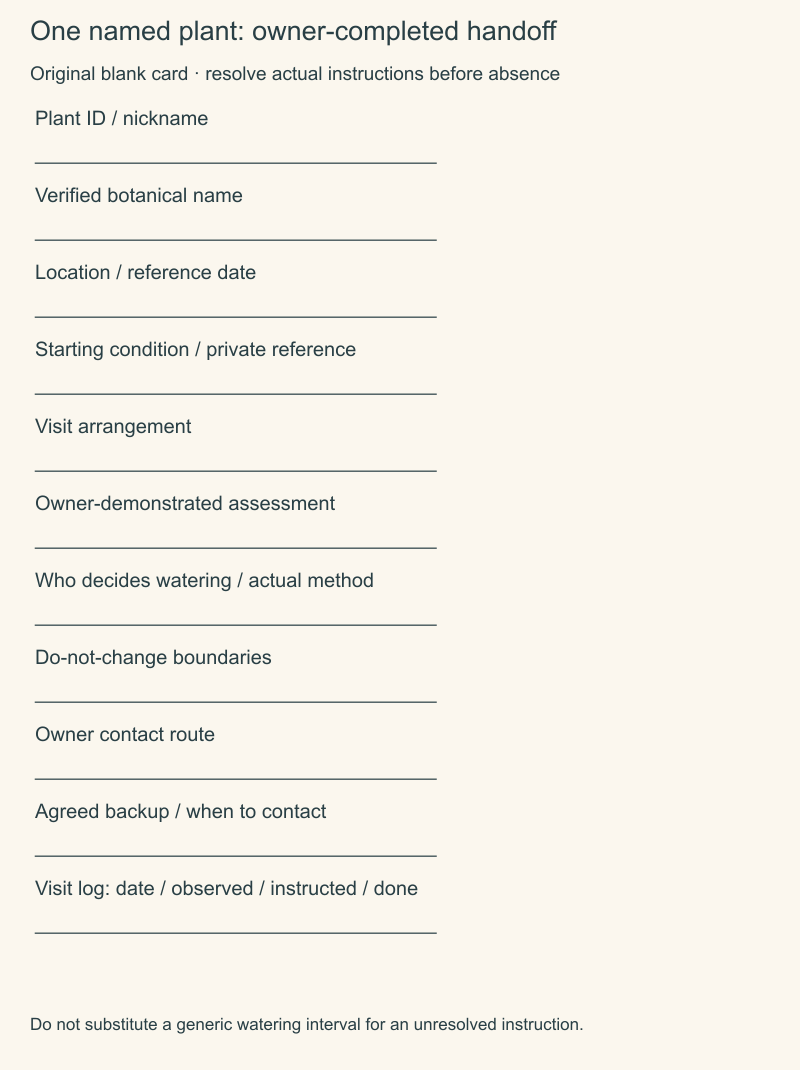
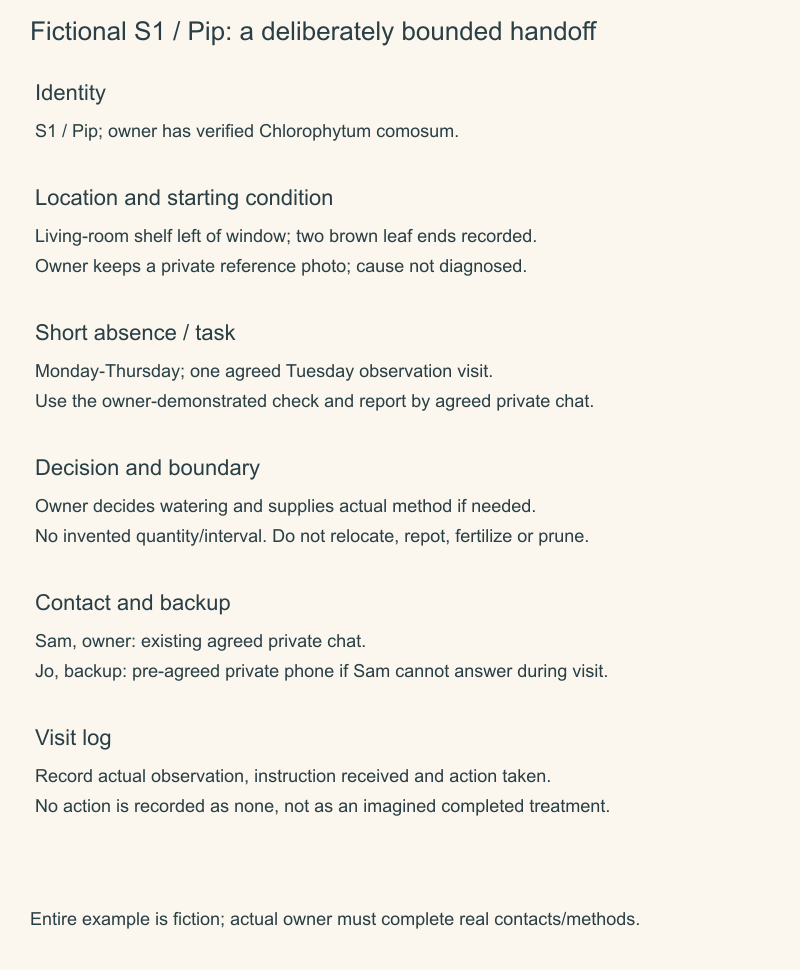
The original blank card asks for plant ID, verified name, present location, reference condition and date. In the fictional example, S1 stays on the living-room shelf to the left of the window. The owner records two already-brown leaf ends and keeps a private reference photograph. Those are invented observations, not a diagnosis of their cause or a claim that the plant is otherwise healthy.
Keeping that starting condition matters if a carer later notices the same ends. The card can say already recorded rather than require a new explanation for every mark. Do not copy the fictional location into another home as a placement recommendation. The actual light, pot, drainage and owner's established arrangement would need their own assessment.
State who makes the watering decision
For this imagined Monday-to-Thursday absence, the agreed task is one Tuesday visit. The carer uses the owner-demonstrated condition check and reports through their agreed private chat. The owner retains the watering decision and supplies the actual method if action is needed. No amount or interval is invented to fill the card; the example deliberately delegates observation rather than unrestricted treatment.
A real owner who wants a different arrangement should record it concretely before leaving, including the demonstrated check, actual method, decision boundary and any relevant product instructions. If those fields remain unclear, the handoff is incomplete. A generic label saying easy care cannot authorize a carer to improvise a quantity, repot the plant or move it into stronger sun.
Give uncertainty an agreed contact route
The filled example says not to relocate, repot, fertilize or prune S1 during the absence. A changed condition goes to the owner through the agreed route. If the owner cannot respond within their agreed arrangement, the carer contacts the actual backup person the owner has designated. That person's role and contact route must be arranged, rather than invented by a reassuring line on a template. In this fiction, Sam is the owner and Jo is the designated backup through a pre-agreed private phone route, contacted if Sam cannot answer during the Tuesday visit.
The blank includes a visit log for the actual date, observation, instruction received and action taken. Leave an action blank or write none when that is what happened. The finished record is useful precisely because it distinguishes observation from instruction and instruction from completed action. No new watering accessory or automatic device is required to make that distinction clear.
Sources & further reading
Published sources for the details and examples discussed in this story.