A pair of yarn tassels can be a small making project in its own right. This adult proposal uses cream and ochre yarn to make two standalone pieces, one at a time. Lion Brand’s six-step tutorial by Erica Jackofsky supplies the attributed construction method; the paired arrangement is our proposal. No physical tassels, attachment strength or finished dimensions have been tested here.
Prepare one working place and two separate yarn choices
Gather suitable cardboard, yarn, scissors and a yarn needle, following the actual materials and tools’ directions. This is an adult making project, not a toy, wearable fastening or decoration for a child’s sleep space. Keep sharp tools and loose strands appropriately managed.
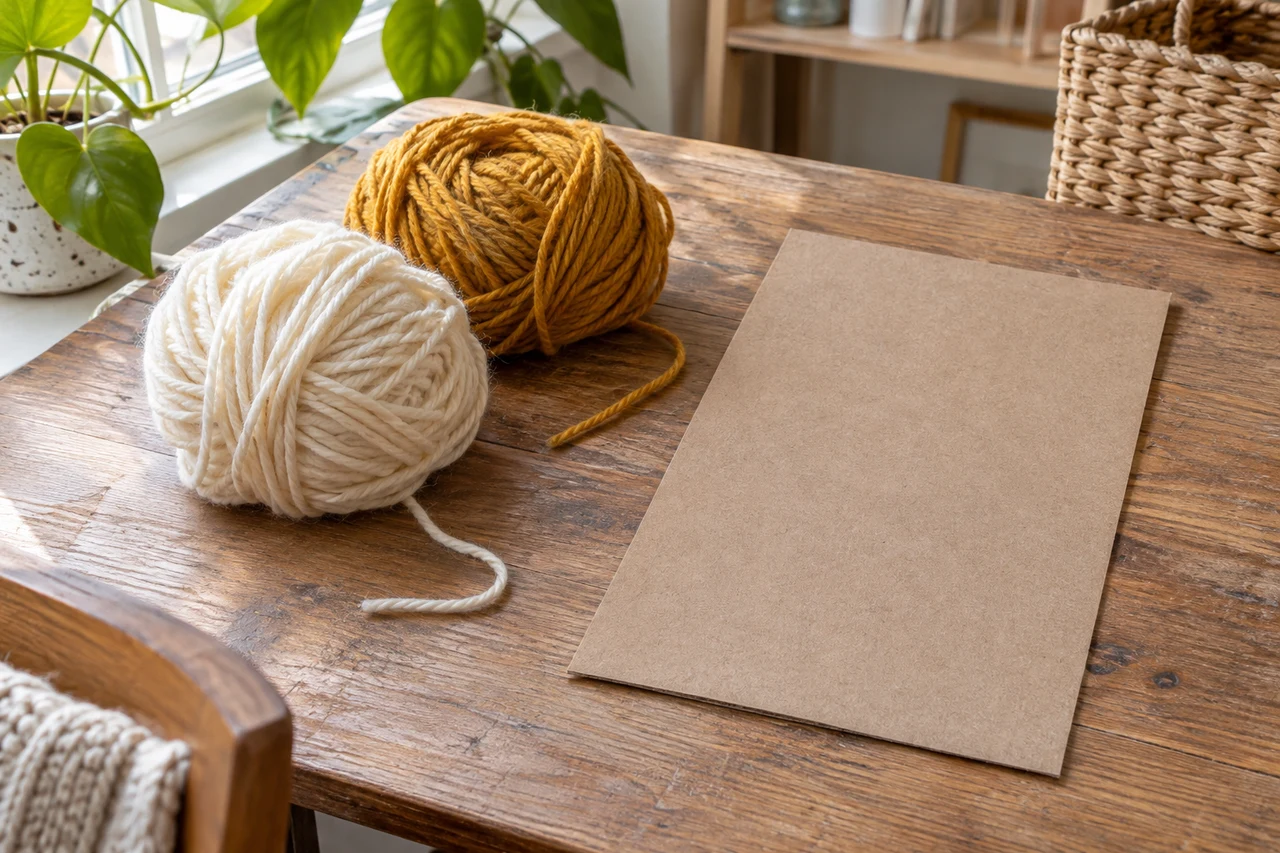
For this proposal, cut a card 4.5 inches long by 3 inches wide. Select cream yarn for the first tassel and ochre for the second. A matching label does not guarantee identical spring, fullness or finished length. Begin with yarn already owned if suitable; a large mixed-color bundle is unnecessary for a two-piece intention. Keep some yarn aside for ties and the neck wraps instead of using every strand in the initial winding.
Secure the top before removing the loops
Following Lion Brand’s method, wrap yarn around the card with relaxed tension. Pass a separate piece under the upper loops and knot it to secure the top before gently sliding the bundle off. Wrap another length around the bundle below that top tie, pull it secure and use the yarn needle to thread the working end beneath those neck wraps. Only after securing the wraps, cut the bottom loops and trim uneven ends.
For the first cream piece, propose 45 wraps around the card’s long dimension, then follow that complete sequence. The count is a starting experiment, not a quantity or fullness guarantee. Lion Brand’s own yarn-specific example does not establish what a different yarn will yield on the same card.
Make the second piece as its own object
Repeat the sequence in ochre using the same card and proposed wrap count. Keep the top tie distinct from the lower loops that will be cut. Do not cut the winding off before the upper tie is secure; that would abandon the order on which the described bundle depends.
Lay the finished intentions beside each other only after both have been secured and trimmed. If the actual yarns produce different lengths or fullness, decide whether that difference suits the pair before trimming more. A common card and count provide a shared starting arrangement, not proof that the two materials behave alike. There is no requirement to keep cutting until the pieces appear manufactured-identical.
Choose the relationship before another purchase
The original composition idea is a pale piece beside a darker, warmer one, with their top ties pointing the same way on a shallow dry display tray. Try that arrangement with the actual pieces if you make them. This proposal does not supply a hanging, sewing or load-bearing attachment method, and no illustrated source tassel has been copied.
Before buying a dedicated tassel tool, ask whether the card already supports the chosen winding sequence. Before buying more yarn, consider whether the existing pair needs another color at all. Store the tools and offcuts appropriately afterward. The project’s intended end is two standalone tassels with a chosen relationship, rather than a claim about yarn substitution, craft speed or the durability of a finished accessory.
Sources & further reading
Published sources for the details and examples discussed in this story.