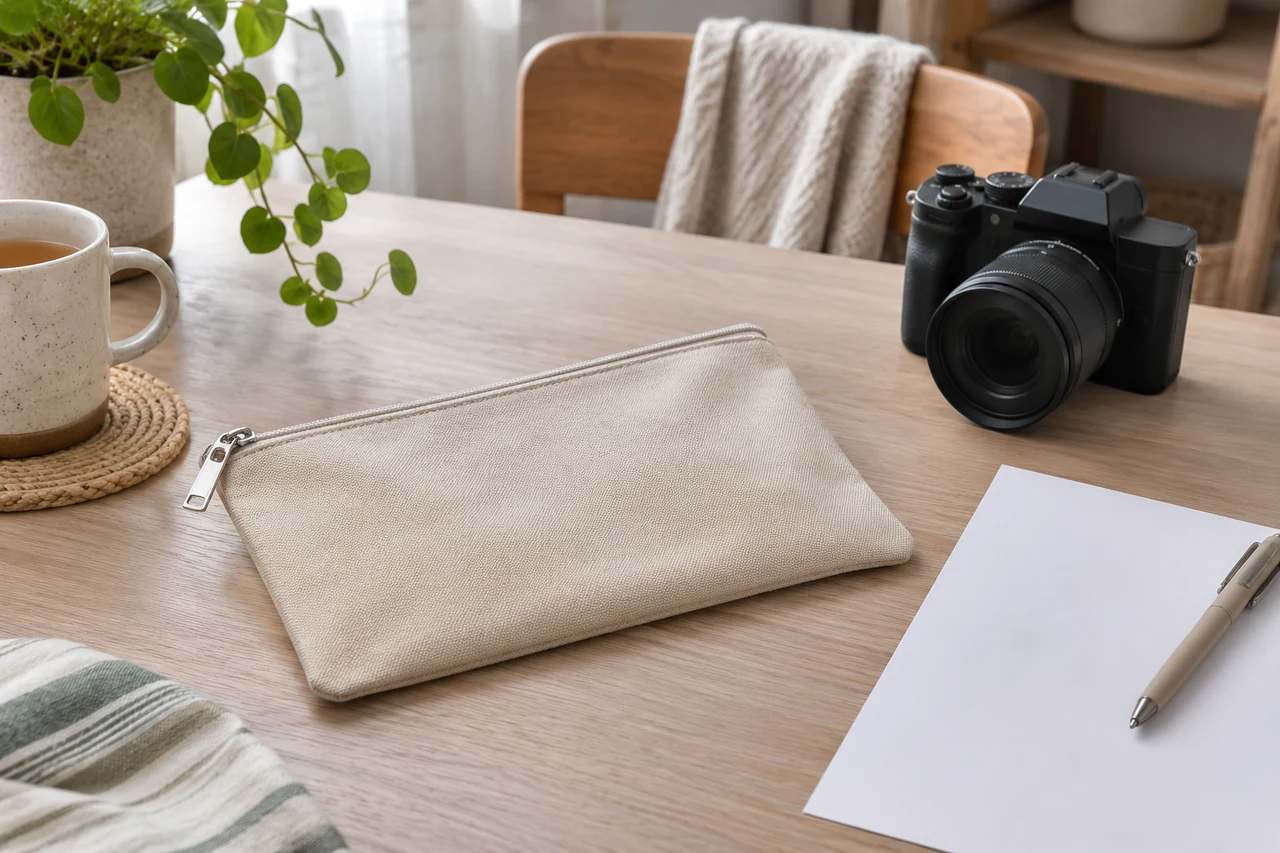
A product photo session is easier to plan when each view answers a shopper’s question. Etsy’s photography checklist suggests considering studio, detail, scale, lifestyle and group views, and keeping clear what is sold when props are used. The original five-view brief below adapts those broad principles to one fictional fabric zip pouch. It is not a mandatory Etsy image count, a photographed listing or a promise of improved sales.
Define the object and what is included
Assume the fictional offer contains one plain fabric pouch and the stated ordinary packaging. No dimensions, fabric composition, washing permission or protective performance have been established. Those facts would need the real product’s information; a picture of fabric cannot provide them. Keep decorative props outside the offered contents unless they are genuinely included.
Write the intended question beside each planned view before arranging backgrounds. This brief uses five views because they cover this example’s needs, not because a marketplace requires exactly five. An actual listing must still follow current platform rules and describe its own product accurately. No shop has been opened or product photographed for this article.
Views one and two establish appearance and scale
View one is an uncluttered overall view of the closed pouch, with its outline and zipper visible. Its job is to show the object being sold. Choose an appropriate plain setting and avoid decorative objects covering the edges. It does not have to imply that the pouch stands unsupported or retains a particular shape when empty.
View two supplies scale using an appropriate clearly identified reference or a factual dimension presentation based on actual measurements. Do not invent dimensions from the first photograph. If a hand or other prop is used, ensure the listing makes its role clear. The brief establishes the question—how large is this pouch?—while the real measurement and photo remain work to perform.
Views three and four answer construction questions
View three is a close detail of a useful feature, such as the zipper end and stitching, photographed on the actual item. Keep the feature identifiable in relation to the overall view. A close crop should show what exists rather than imply a verified strength, waterproof rating or craftsmanship certification from appearance.
View four shows the reverse and closure arrangement. For this example, opening the zipper could reveal the actual interior if that is relevant and accurately represented. Do not add an invented lining or pocket to make the shot more interesting. If several different products are sold, photograph and label the actual variation rather than assume one reverse view describes them all.
View five closes the included-parts question
The last planned view places the actual pouch beside its included packaging, with any non-included styling removed or unmistakably separate. Its purpose is to let the shopper understand what arrives, not to create a bundle from nearby decorative objects. Packaging appearance does not establish shipping protection or a carrier-approved packing method.
Review the proposed set as a sequence: overall object, size, useful detail, reverse or closure, and included contents. Etsy supports planning different views and showing multiple angles; this particular five-part brief is original. Alt text still needs the purpose and actual content of each finished image. Before buying more lights, backdrops or software, identify which unanswered product question the existing equipment cannot capture accurately.
Sources & further reading
Published sources for the details and examples discussed in this story.