A building set can leave one focal object or several pieces to arrange. LEGO’s Mini Orchid 10343 and Tiny Plants 10329 offer those different endings. This comparison uses their US product descriptions checked November 9, 2026. No set has been assembled or displayed by us; the two home plans below are proposals.
One orchid gives the project one destination
Mini Orchid is an adult set labeled 18+, with 274 pieces. Its described model has five open flowers, buds and green leaves in a terracotta-colored pot on a wood-effect plinth. The complete object, rather than a collection of loose stems, is the purchase to consider.
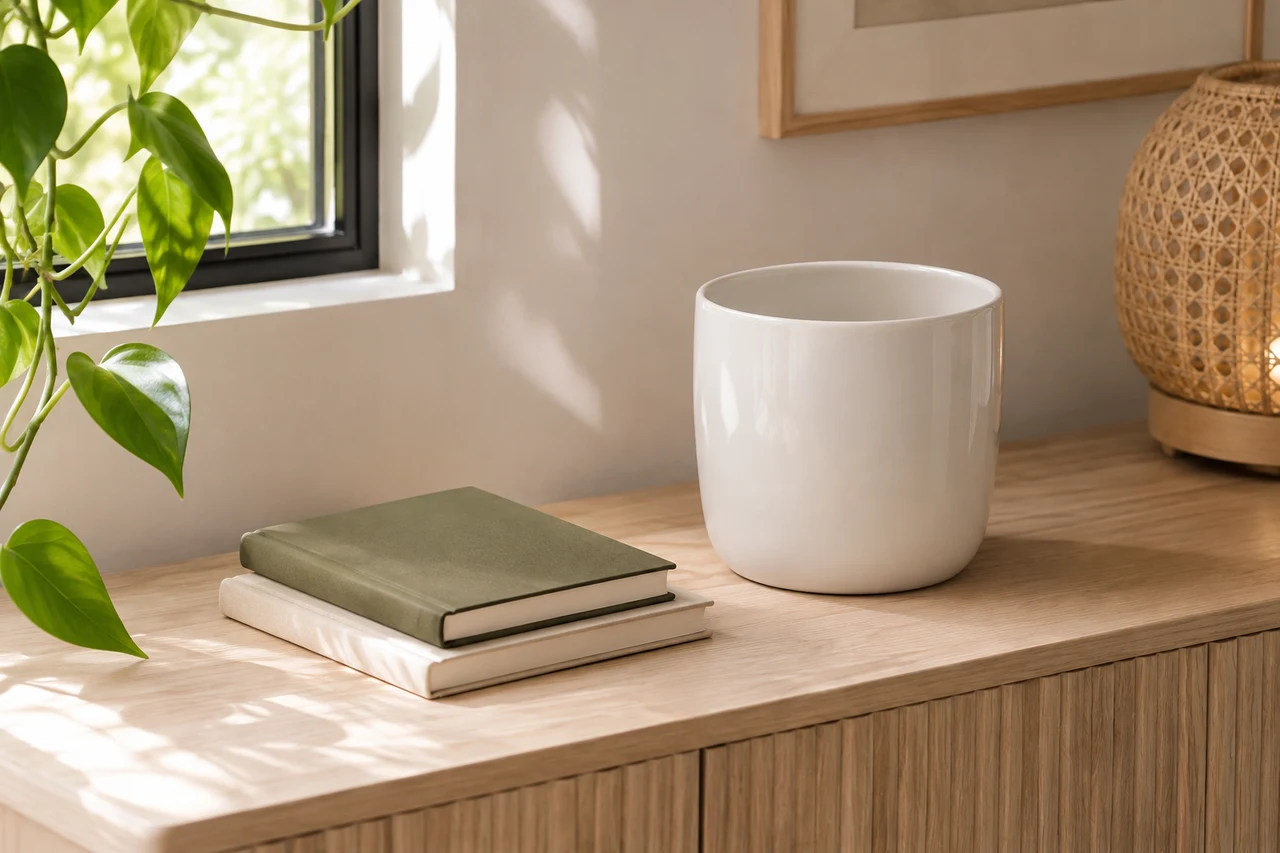
Imagine an owner who wants one floral object on an otherwise quiet sideboard. The proposed arrangement keeps a familiar framed photograph nearby and leaves the rest of the surface available. The orchid would have a defined destination before the first bag is opened. This is an original display intention, not a photograph of the finished set in that room.
Nine pots create a different arrangement decision
Tiny Plants 10329 is also labeled 18+. It has 758 pieces and nine individually potted models based on arid, tropical and carnivorous plants. Each has a buildable terracotta-colored container. That offers several separate objects to arrange instead of one orchid composition.
Imagine a second owner who wants a small collection divided between a desk shelf and a bookcase. Before buying, decide which models would belong together and whether both surfaces should carry part of the collection. Nine objects do not automatically improve a room; they create nine placements that can either support the intention or become an unwanted scattering.
Choose the project structure without timing it
The first owner wants to work toward one complete display. The second likes the prospect of completing separate plant models before deciding on their final grouping. These are proposed ways to approach the sets, not measured sessions or claims that one project is easier or more satisfying.
Both listings provide building-instruction options, including digital instructions; Mini Orchid expressly lists printed instructions as well. We have not inspected the complete assembly guides. Piece counts identify the sets, but they do not establish hours required, personal difficulty or any therapeutic benefit. Follow the exact instructions rather than trying to construct a plant from this buying comparison.
Buy for the objects you will keep
Check the actual available display space and current set information before ordering. Tiny Plants’ numerical dimensions are omitted here because the page uses differently rounded presentations; no exact fit is promised for either imagined location.
I would investigate Mini Orchid for a deliberate single focal object and Tiny Plants for a collection whose separate placements are wanted. Neither is a tested winner. Keep the current contents and intended adult recipient in view, and avoid adding another set simply to make a proposed display look complete. The useful outcome is a project with a destination, whether that destination holds one model or several.
Sources & further reading
Published sources for the details and examples discussed in this story.