A paper bead string can begin with an ordering decision rather than a large craft kit. This original adult project proposes twelve rolled paper pieces in two colors, then compares two complete arrangements using that same set. The straw-roll and transfer mechanism is credited to the Children’s Museum of Pittsburgh activity shared by Kidsburgh. The color plan and decorative role here are original, and no finished sample has been made or tested.
Prepare a small, deliberate set
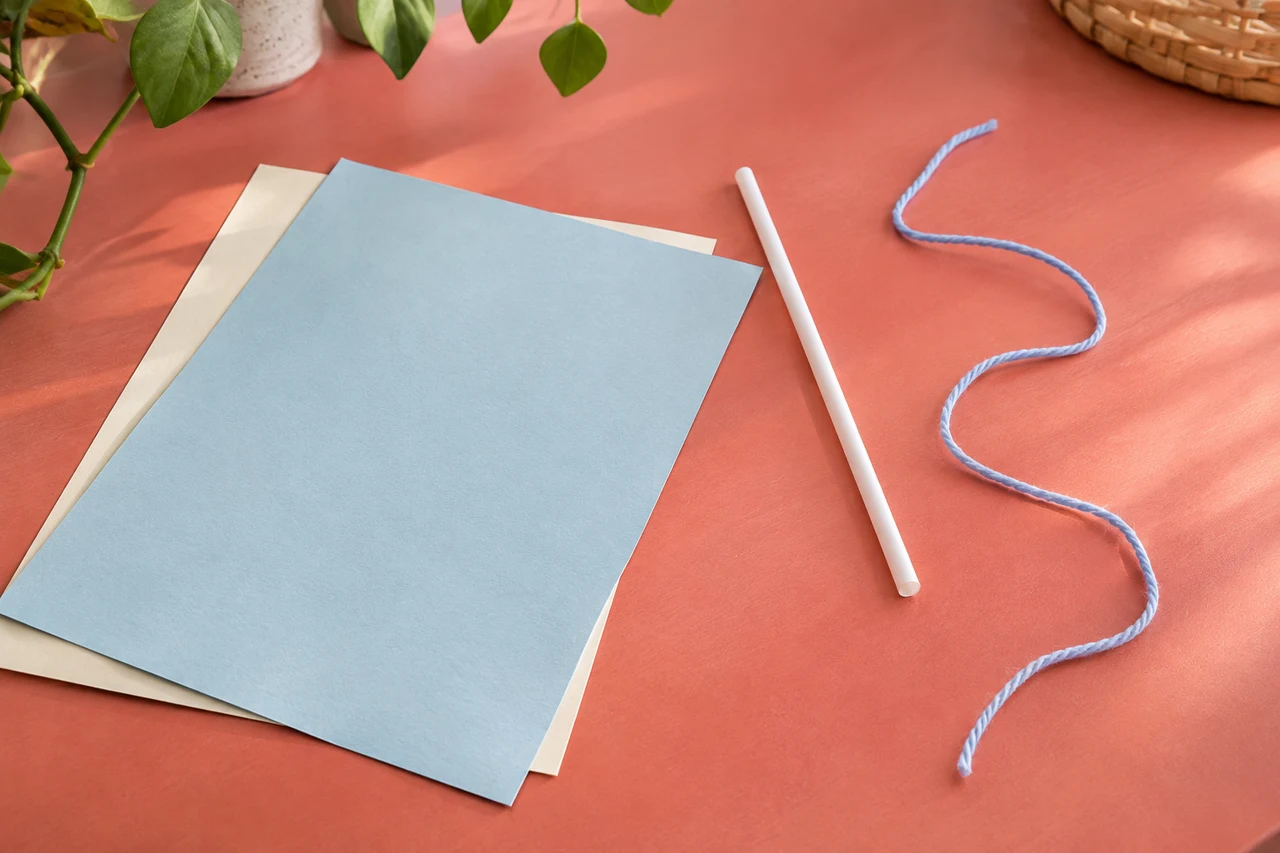
Choose six suitable paper strips in color A and six in color B, a suitable straw, yarn, cutting tools and paper adhesive. Follow the actual tool and adhesive instructions, including application and drying requirements. Use material appropriate to this small dry decoration rather than promise that every glossy or coated scrap accepts the same glue.
For an original starting proposal, make the strips alike before comparing their colors. Their actual size and the straw affect the resulting pieces; this plan establishes no bead diameter, string length or load rating. Put the intended twelve positions on a separate note so the count remains independent of any piece that needs remaking.
Roll and transfer using the attributed mechanism
The shared museum activity describes cutting paper strips, gluing and rolling them around a straw, then sliding the rolled pieces off. Its stringing route puts the pieces back on the straw, passes string through it and transfers the beads to the string. Follow the adhesive’s own setting instructions and keep the passage usable; no source video or diagram is reproduced here.
Inspect actual pieces before assigning them to an arrangement. A stuck, crushed or unraveling piece is not a successful bead simply because the count needs twelve. This project reports no tested join and supplies no coating, heat-setting or chemical mixture to make the result imitate a commercial accessory.
Compare two whole arrangements with the same colors
Arrangement One is A B A B A B A B A B A B. Each change arrives after one piece. Arrangement Two is A A A B B B A A A B B B. The same six A pieces and six B pieces now form four groups of three. These are original sequences, not a copied museum pattern.
Lay the pieces in the proposed order before transferring them. I would choose the first when I wanted a frequent small alternation, and the second when I wanted each color to remain present for longer. That is a compositional preference, not a prediction of how every viewer will respond or a claim that a different sequence improves the material.
Keep the finished role modest
For this proposal, place the dry decorative string in an appropriate tabletop display with its ends kept together. It has not been assessed as wearable jewelry, a hanging support or a child’s toy. The visual idea does not require claiming durability or a finished length that has never been measured.
Before buying another assortment, check whether suitable paper already supplies the two colors you want. A useful later purchase would answer an actual material or handling gap. Save the sequence note if you want to revisit the color rhythm, while keeping any later making observations separate from this untested plan.
Sources & further reading
Published sources for the details and examples discussed in this story.