A December keepsake need not begin with a special outing or a photograph suitable for a printed album. A sound heard during an ordinary task, a cup used at breakfast or a small change outside a familiar window can supply a specific line. This original twelve-card deck gives those observations places without asking anyone to invent a memorable day. The blank cards and sequence are proposed materials; no family responses or benefits from using them are being reported.
Give each card one job
Each card has a number, a complete prompt, a date-observed field and room for one concrete observation. A final small field can identify a later addition. That separation lets a reader distinguish a line written at the time from something added afterward. An empty card can stay empty; the project does not require a daily success record.
Use the four original pages as a deck of twelve cards, three to a page. The original layout uses A4 page proportions. Review the print settings you choose before cutting. Exact finished measurements are not part of this project: keep each complete prompt and its writing fields together. Use paper you already have, or keep the twelve prompts in a notebook instead of printing the pages.
Cards1-3: begin with something you actually noticed
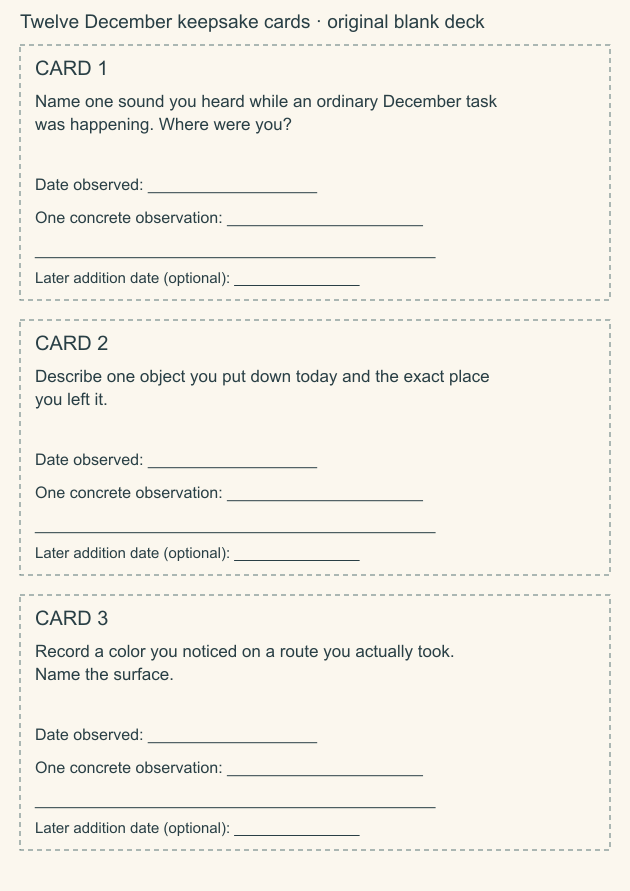
Card 1: Name one sound you heard while an ordinary December task was happening. Where were you? An answer needs the task and place as well as a sound word. A kettle click beside the kitchen counter is more recoverable than a generic sentence saying the day felt festive. This is a writing suggestion, not an actual response supplied by a participant.
Card 2: Describe one object you put down today and the exact place you left it. The object need not be a gift or decoration. A glove on a hall shelf or a spoon beside a bowl would give a line a location. If you cannot remember the place, keep that uncertainty rather than supplying a more picturesque one.
Card 3: Record a color you noticed on a route you actually took. Name the surface. This keeps the answer attached to an observed thing instead of asking for a favorite seasonal palette. The route can be entirely ordinary. Do not add an address or another person's identifying information merely because the card asks for specificity.
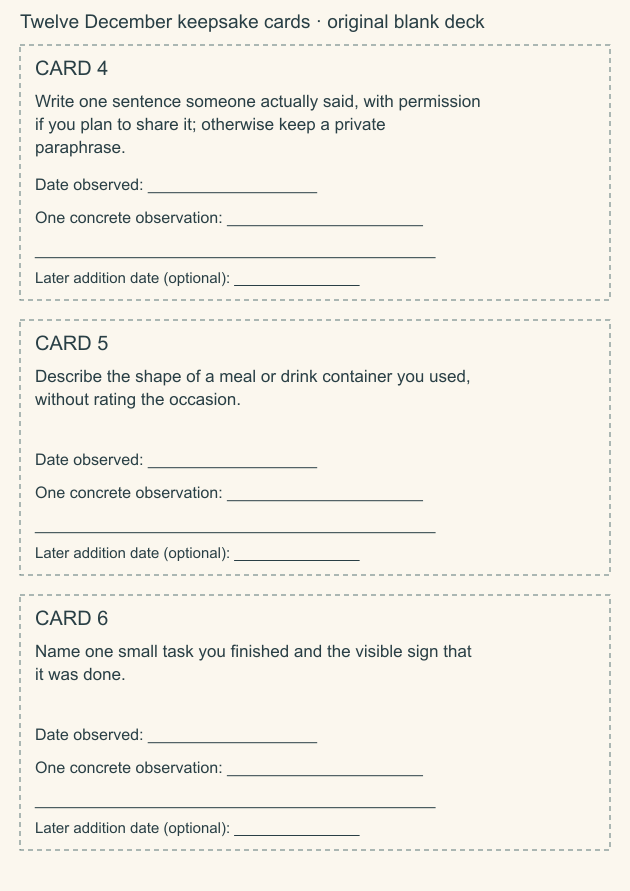
Cards4-6: give words and tasks a clear source
Card 4: Write one sentence someone actually said, with permission if you plan to share it; otherwise keep a private paraphrase. Quotation marks belong around words remembered accurately enough to quote. A paraphrase should be labeled as your recollection. The prompt is not permission to publish another person's private conversation or turn an imagined line into a family quotation.
Card 5: Describe the shape of a meal or drink container you used, without rating the occasion. A narrow mug, a shallow bowl or a rectangular lunch box can be enough. The prompt asks for an object observation, not a recipe, nutrition claim or verdict about whether the meal was worthy of a keepsake.
Card 6: Name one small task you finished and the visible sign that it was done. The second part makes the line more concrete: a closed envelope, a cleared patch or an item returned to its place. Do not make this into a tally of productive days. It is one possible subject for a card, not a standard every December day must meet.
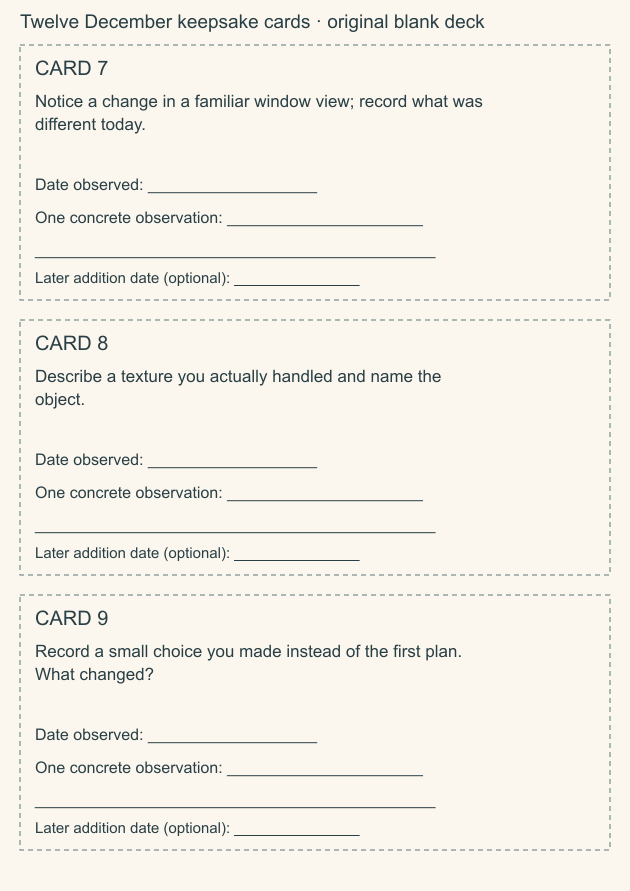
Cards7-9: record a change without improving the story
Card 7: Notice a change in a familiar window view; record what was different today. Identify the actual difference you noticed rather than assuming a dramatic snowfall or a glowing street. If the view seemed unchanged, that can be the observation. The deck does not depend on a particular climate, holiday tradition or type of home.
Card 8: Describe a texture you actually handled and name the object. The object gives the texture a context: a ridged lid is different from an unsupported list of adjectives. Choose an ordinary appropriate object; the prompt does not call for touching an unknown, fragile or unsuitable material simply to obtain a more interesting answer.
Card 9: Record a small choice you made instead of the first plan. What changed? Keep the change within the event you can describe. Choosing another cup because the first was in use is sufficient. There is no need to turn a minor substitution into a lesson about your character or claim that an outcome was better without evidence.
Cards10-12: let the deck refer back to itself
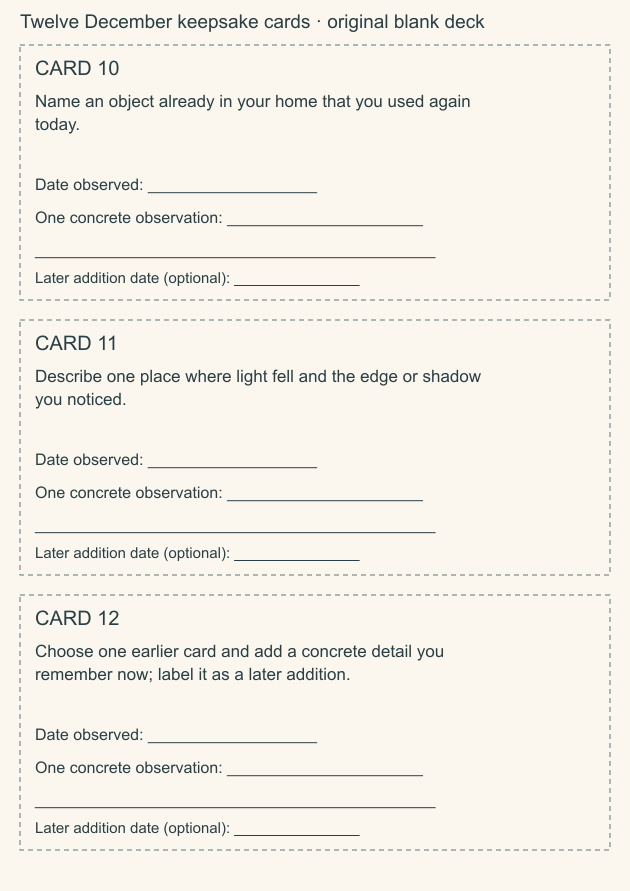
Card 10: Name an object already in your home that you used again today. The word again makes reuse a possible subject without requiring a purchase. Its age, price or sentimental history need not be known. A short record can identify the object and today's use while leaving an uncertain origin unstated.
Card 11: Describe one place where light fell and the edge or shadow you noticed. This is a visual observation in words; no camera is needed. A line on a wall, a table edge or a shadow beside a familiar object gives the description something specific to return to. Avoid converting it into an unsupported claim about the exact time or weather.
Card 12: Choose one earlier card and add a concrete detail you remember now; label it as a later addition. Keep the original line intact. For example, the new entry could begin Later addition, with its actual writing date and the earlier card number. It should not silently replace what the first note said. This closes the deck by making a return visible.
Choose an order without creating an obligation
One optional sequence uses December 1,3,5,7,9,11,13,15,17,19,21 and 23 for cards 1 through 12. Those are twelve dates, each two days apart. The sequence is an organizing proposal, not a claim that memories occur on schedule. The date-observed field should contain the actual observation date, even if you complete the card later or use a different order.
Keep the cards private by default and decide separately what, if anything, to share. A printed album can wait until there is material you actually want in it. No paid journal, decorative storage box or matching stationery set is required for the first deck. Its finished value is a collection of attributed, dated small observations, including gaps and later additions, rather than a polished story that the month was never obliged to provide.