Imagine opening a laptop on a train and discovering that the meeting you planned to join aloud is incompatible with the carriage you chose. The problem is not whether the seat is comfortable. It is whether your intended activity belongs in that shared space. Amtrak's Quiet Car guidance provides a specific answer about conduct, alongside a separate answer about how seats are obtained. Read both before treating quiet as a service you can reserve in the same way on every train.
Quiet describes shared conduct
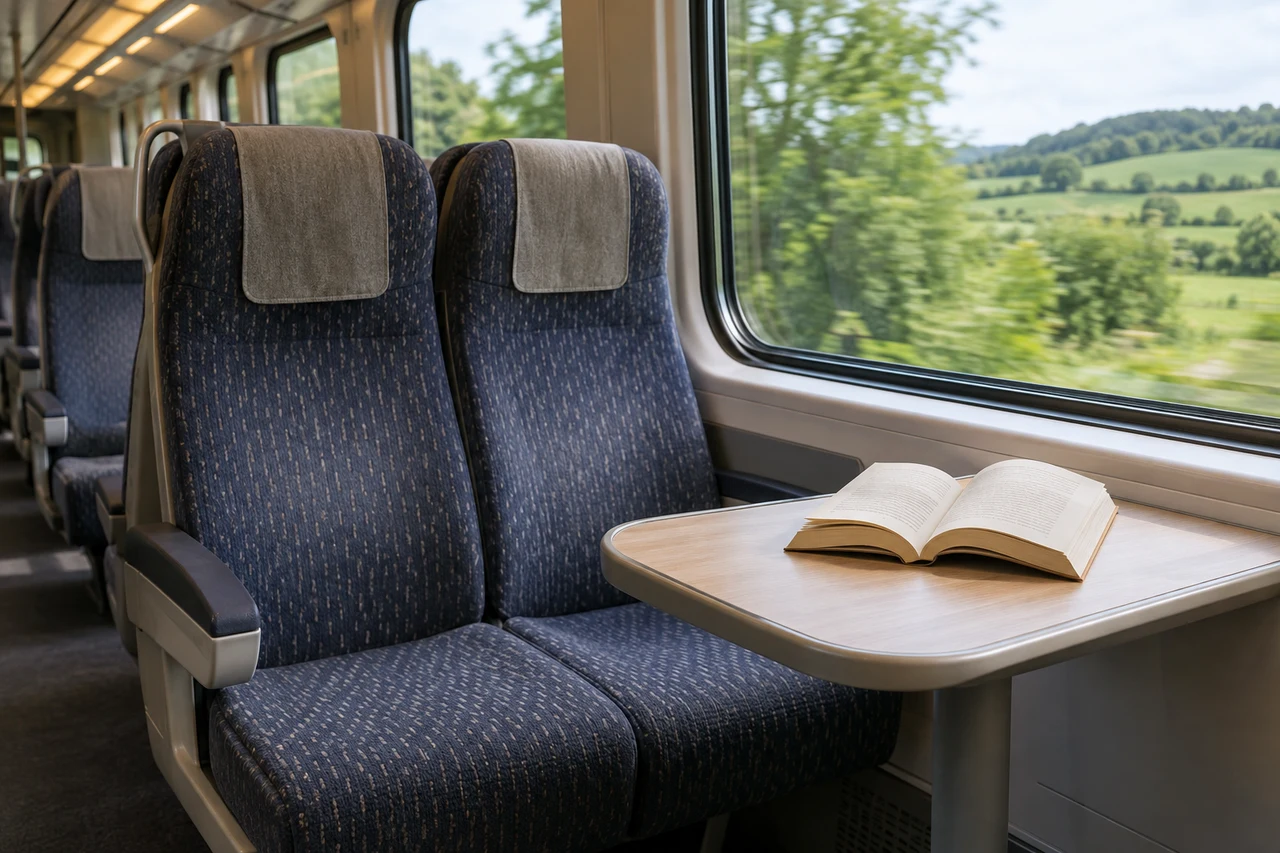
Amtrak asks Quiet Car passengers to limit conversation and use subdued voices. Phone calls are not allowed. Portable electronic devices must be used with headphones, and their volume must be low enough that other passengers cannot hear the audio. These are published expectations for a shared carriage, not a promise of absolute silence or exclusive occupancy.
For an invented traveler planning to read, the absence of a planned call makes the choice more plausible. For an invented traveler who must take a phone meeting, headphones do not remove the prohibition on calls. Moving the audio into headphones would address only what comes out of the device; it would not change the fact that the traveler intends to speak on a call. Choose a plan consistent with the actual rules rather than buy an accessory to solve the wrong problem.
Find the car on the actual service
The published page identifies Quiet Cars on named services, including Acela, Northeast Regional, Keystone Service, Hiawatha and Blue Water, as well as selected Wolverine, Capitol Corridor and Empire Corridor trains. The word selected matters. A route name in a general list does not establish the arrangement on every departure associated with it.
Amtrak directs passengers who are uncertain about the location to ask the conductor. Use the exact train and its current information when planning. This article supplies no coach number, present equipment assignment or prediction about how busy a departure will be. A symbol and an actual staff direction are more useful than transferring a remembered carriage position from an earlier trip.
Keep the Acela exception attached to the sentence
The guidance says that, unless the journey is on Acela, Quiet Car seating is first come, first served and cannot be reserved. It also says there is no additional charge to sit there. Do not shorten that into every Quiet Car seat can be reserved or none can ever be reserved: either version drops part of the published distinction.
For a hypothetical Northeast Regional plan, buying an ordinary journey does not establish that the desired Quiet Car seat will be available when boarding. For an Acela plan, the general page marks an exception; establish the exact seating arrangement through that service's current booking information rather than invent an assigned seat from the exception alone. No booking or availability check was performed for this comparison.
A spare seat does not become personal storage
Amtrak asks each passenger to occupy one seat and not place belongings in adjacent seat space. The page also says that passengers who find seats only in the Quiet Car must follow its guidelines. The conduct requirement does not disappear because someone did not originally intend to sit there.
Before choosing the space, describe the activities the journey actually requires: reading, quiet work, a conversation or a call. Then compare them with the rules and resolve the exact service's seating process. Noise-canceling headphones may be an ordinary personal preference, but no product can turn this shared carriage into a private compartment or create an unavailable reserved place.
Sources & further reading
Published sources for the details and examples discussed in this story.