One versatile belt can make existing clothes easier to wear without becoming a project of its own. Start with the trouser loops, waist positions and outfits already in the wardrobe. The best choice is the one that fits those actual combinations, including when seated, rather than a familiar color purchased in a guessed size.
Check the loops and the intended position
Measure the belt loops on the garments you expect to wear most often. Consider whether the belt will sit at a trouser waistband or over a dress or jacket. Those positions may require different lengths or widths. Try a current belt in each role to see what works and what causes irritation. Do not force a wide belt through narrow loops or assume that a long tail will sit neatly in every garment. The wardrobe should define the useful range before a retail size label enters the decision. If one belt cannot serve every role, prioritize the role you actually repeat.
Use the brand's own sizing method
Belt labels do not all describe the same measurement. Levi's provides separate belt sizing information within its own size guide, which is a reason to consult the exact maker rather than rely on a general rule borrowed from another brand. Check where the measurement begins and ends and compare it with an existing belt that fits in the intended position. Do not infer the correct size solely from trouser size when the manufacturer supplies a different method. If between sizes, ask the seller about the specific model and return terms instead of assuming additional holes can be added appropriately at home.
Look at the buckle with complete outfits
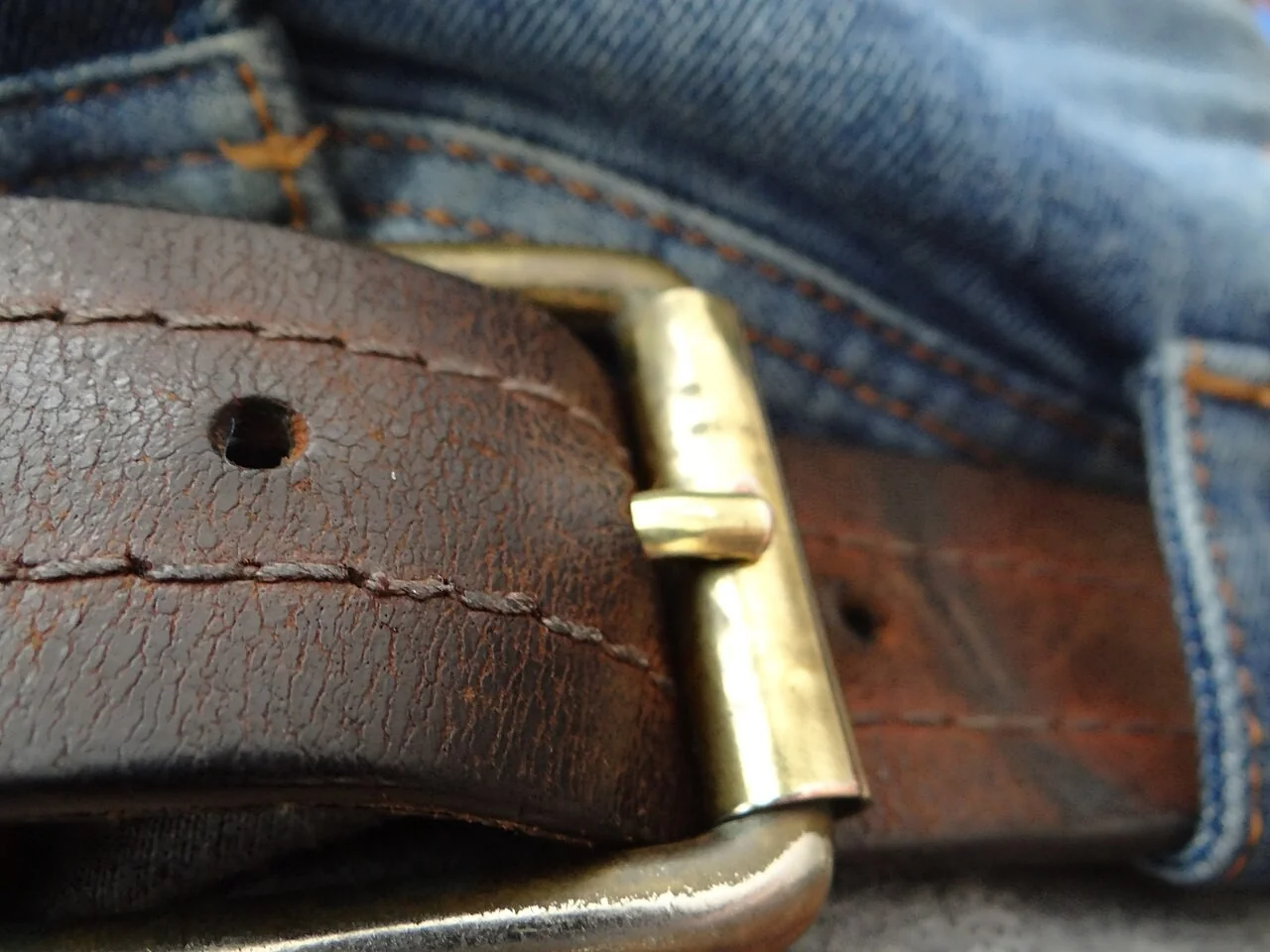
A buckle can be a focal point or a quiet functional detail. Try it with the fastenings, jewelry and bag you actually use rather than insisting that every finish must match precisely. Check how it behaves beneath a close-fitting top and whether fastening it is straightforward. A dramatic shape may be worth choosing for its appearance, but it should be comfortable during ordinary sitting and movement. Compare the weight and dimensions where a sample is available. A subtle finish does not automatically make a belt more versatile if its proportions feel wrong with your clothes.
Choose material and care deliberately
Read the maker's material description and care guidance for the complete belt. A surface finish, lining or decorative treatment can change the appropriate routine. Do not apply a care product intended for another item without checking compatibility. Inspect the edges, fastening and stitching of the actual piece where possible, without treating appearance as a laboratory test of durability. Keep the final decision modest: a belt for a few named outfits, with an understood size and maintenance plan. If an existing belt already provides that function, repairing it through an appropriate service may be worth considering before buying a near duplicate.
Sources & further reading
Published sources for the details and examples discussed in this story.