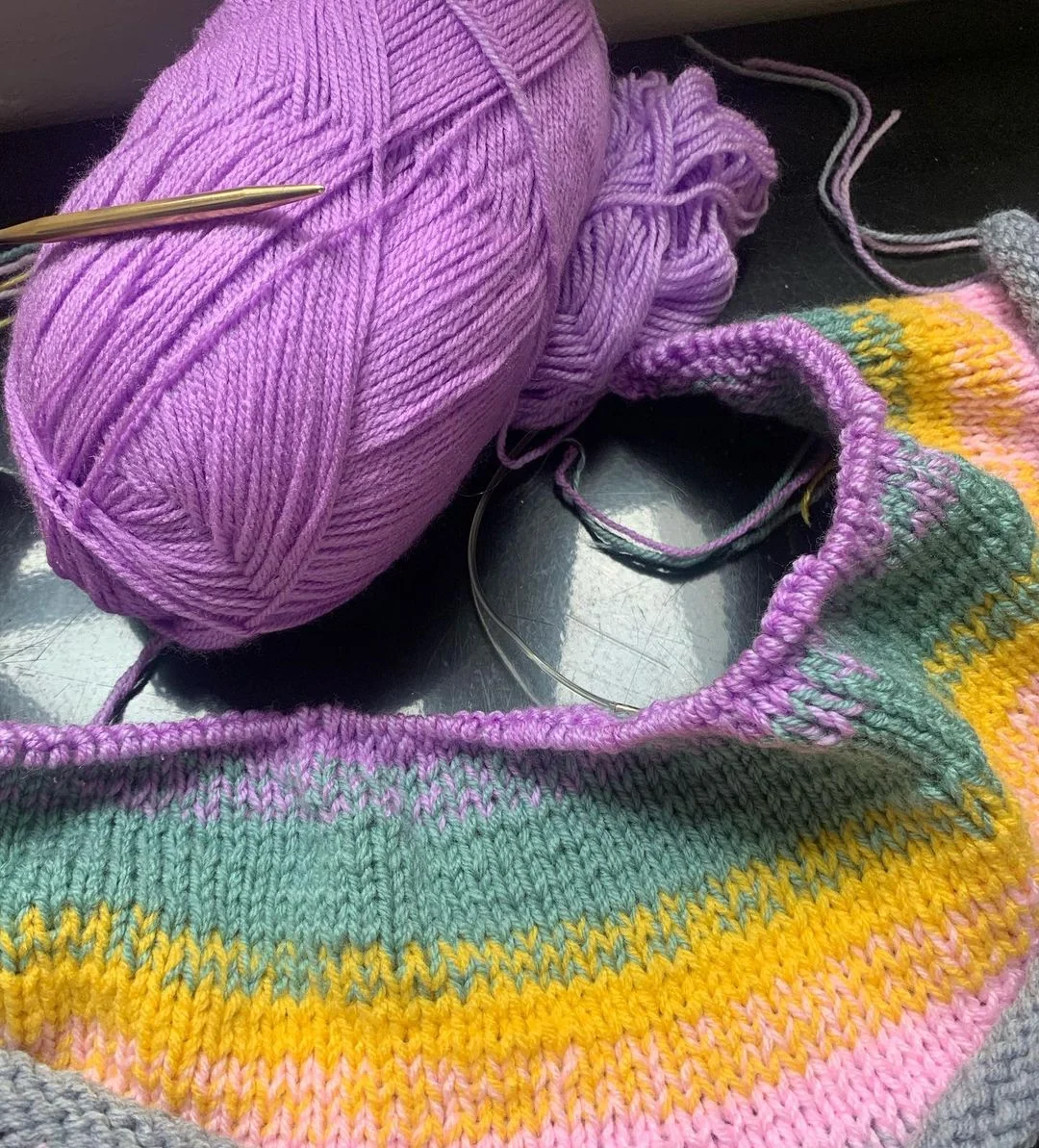
A favorite yarn in the same weight category can look like an easy substitute for a knitting project. The category is useful information, but it does not establish the finished fabric or fit. Keep the actual pattern requirements and yarn information together before buying the full project quantity. A small numerical example shows why matching a category name is only the beginning.
The council labels its ranges as guidance
The Craft Yarn Council’s Standard Yarn Weight System groups yarn thicknesses and provides commonly used gauge and tool-size ranges, explicitly as guidelines. Its FAQ says the chart is not an interchangeability chart: a gauge swatch is needed, and even a matching gauge leaves fabric qualities such as softness and drape to consider.
Copy the actual pattern’s stitch, gauge and measurement instructions, then identify the proposed yarn, fibre information, label gauge and supplied length. Keep ball weight separate from the thickness category. Do not assume that an identical category number or ball weight supplies every requirement of the pattern.
An original arithmetic illustration
Suppose a purely hypothetical pattern calls for 20 stitches across 4 inches, while a proposed sample gives 18 across 4 inches. Simple flat arithmetic would make 80 stitches span 16 inches at the first rate and about 17.8 inches at the second. This is an invented numerical illustration, not a knitted test or a prediction of a real garment’s fit.
The difference explains why an actual sample and the pattern’s measurement method matter. Record what you actually make and measure according to the relevant instructions, including any required finishing. If you have not made a sample, keep the substitution unconfirmed rather than claiming the label alone proves it will work.
Buy the quantity after the comparison is meaningful
Before ordering, compare the pattern’s required length/quantity with the actual proposed yarn information and ask the pattern designer or supplier about unresolved substitution questions. Do not replace a needed calculation with a promise that the same number of balls will be enough. This guide establishes no tested yarn combination, care result or finished dimensions.
An original project note can retain the pattern/version, yarn/lot identity, actual sample method/result and remaining quantity questions. If the proposed fabric does not serve the design, choosing another yarn or project may be better than buying more of an unsuitable substitute. The useful purchase is tied to the actual project evidence, not only a familiar category on a label.
Sources & further reading
Published sources for the details and examples discussed in this story.