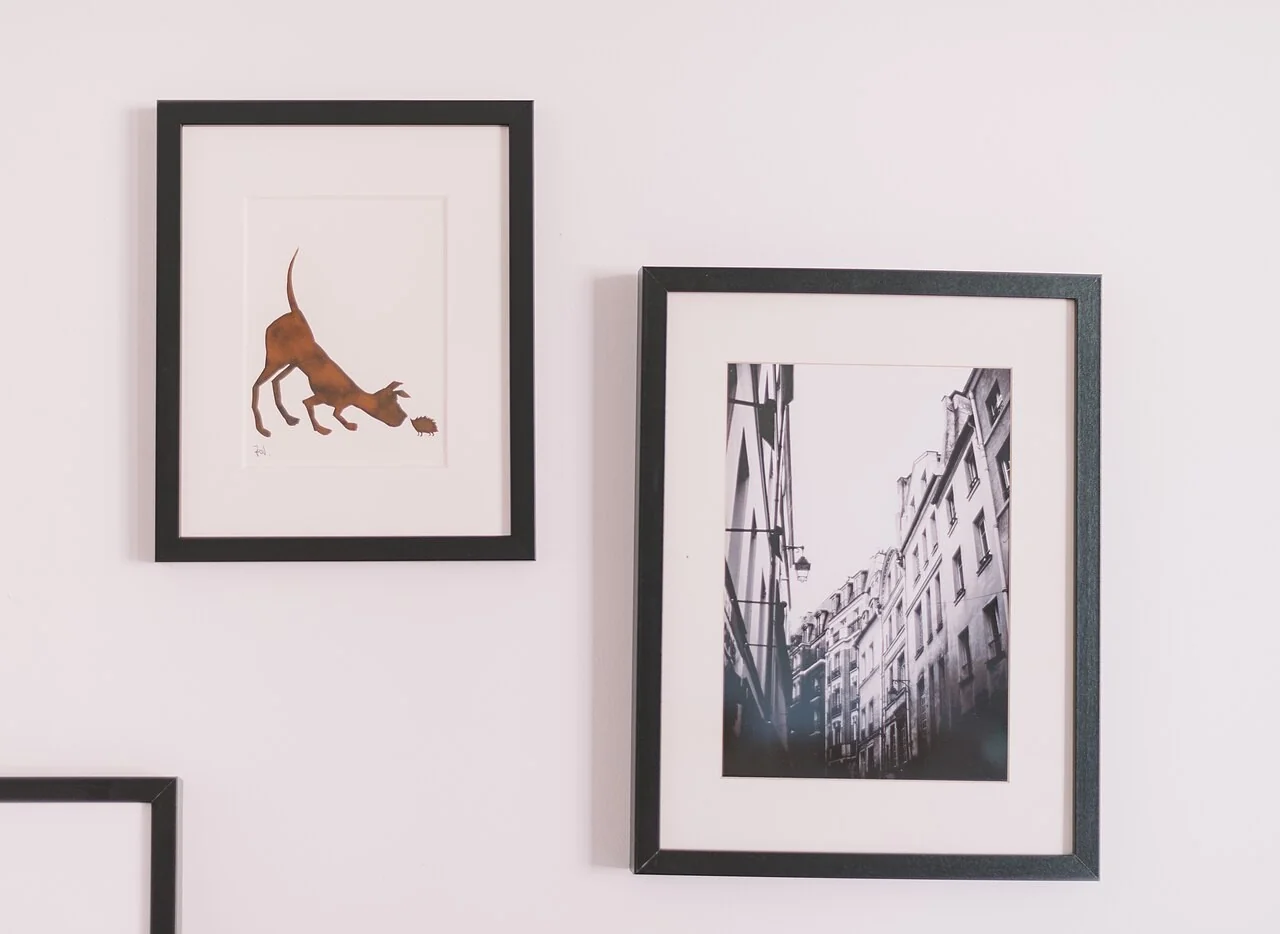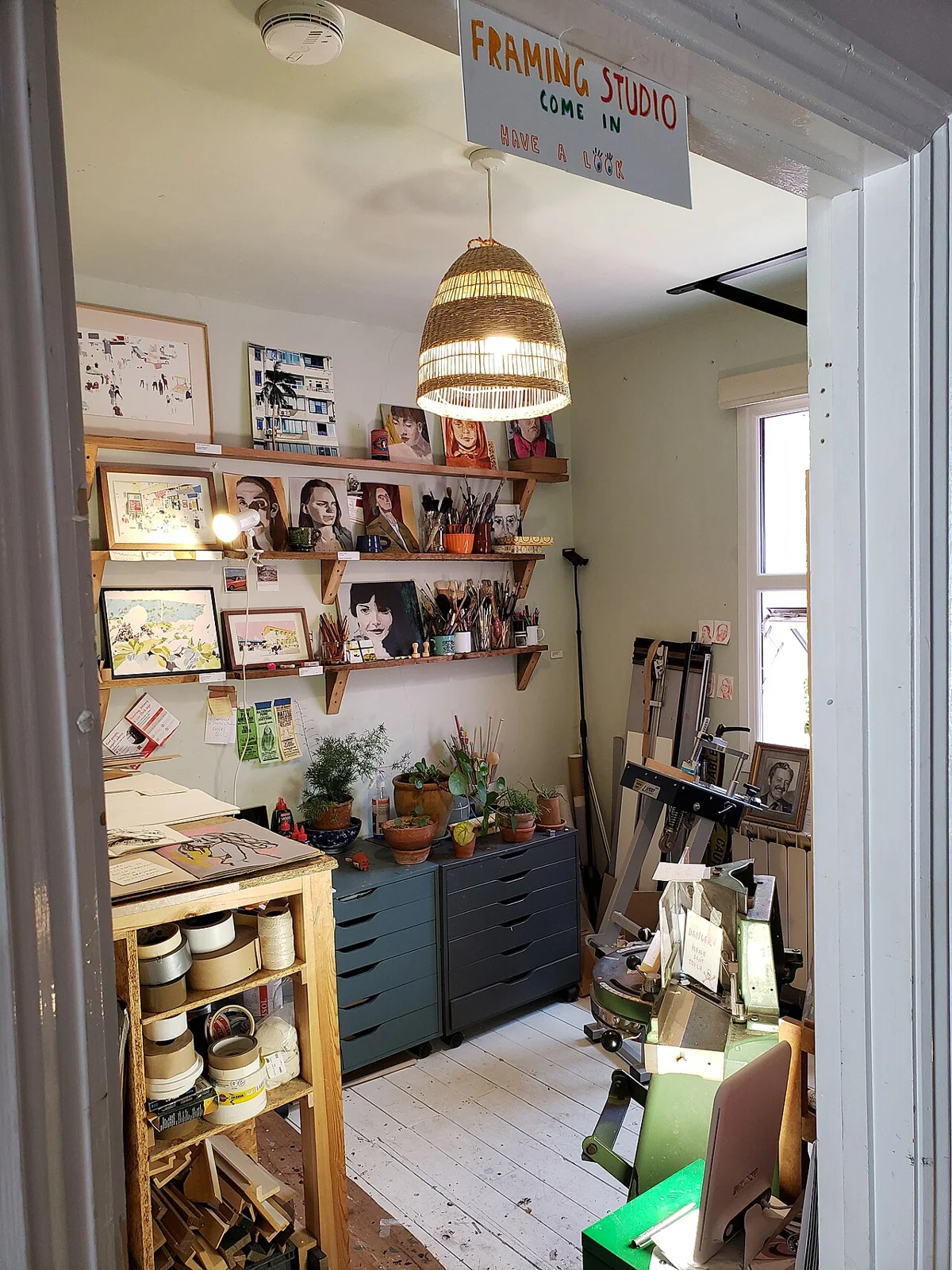
Two quotations can describe the same print behind different glazing without explaining why the materials differ. Ask the framer to compare glass and acrylic for the particular work and how it will be handled. The decision is about a protective material and its limitations; frame color and the arrangement of a wall can wait.
Name what is actually being enclosed
Bring the work's medium and any maker's handling information, rather than describing everything as a print. Is it a replaceable reproduction, a photograph, a charcoal drawing or something whose material you do not know? Tell the framer if the surface appears loose, powdery or already damaged, without rubbing or testing it. Unknown media are a reason to ask for assessment, not to infer suitability from a product photograph.
For a family piece or an irreplaceable original, explain what makes it important and whether conservation advice is needed before reframing. That conversation may change which professional handles the work. This guide is a way to prepare questions, not an instruction to dismantle an old frame, clean the artwork or conduct a home materials test.
Ask which physical tradeoff the material resolves
The Canadian Conservation Institute describes glass as heavier and more resistant to scratching than many plastics, while plastic glazing is lighter and less breakable. Ask the framer which of those differences matters in your case. A work that will be moved regularly raises a different handling question from one that stays in place. A light sheet is not automatically the right specification for every artwork.
Discuss the complete assembled weight and who will handle installation or transport. Do not choose a fitting or shipping method from this general comparison. Ask whether the proposed thickness and material suit the existing frame if it is being retained. Obtain the exact glazing name in the written specification so that a later cleaning or replacement question does not depend on remembering a vague premium description.
Make static sensitivity a separate question
Acrylic's static behavior is especially relevant to loose media. The US National Archives advises avoiding acrylic for pastels and other powdery or flaking materials because it can generate static. Do not treat a change from glass to standard acrylic as a harmless weight-saving substitution for such a work. Tell the framer the medium before accepting the substitution, and ask whether specialist assessment is appropriate.
Some products have additional coatings or properties. Ask what is documented for the exact product, rather than assuming that an anti-reflective label also means anti-static or that all acrylic sheets behave identically. The artwork should not be pressed against its glazing; discuss how the chosen material and the existing enclosure will keep them separated. This is a compatibility question for the framer, not a request for a thinner overall package.
Keep claims and aftercare with the specification
Ask separately about reflection, ultraviolet filtering and cleaning. These describe different features. The National Archives notes that visible as well as ultraviolet light can damage paper and photographs, so filtering is not a promise of permanent protection. Avoid choosing by an unexplained museum or conservation adjective alone. Request the product information that supports the feature you are paying for.
Finally, ask for cleaning instructions for the actual surface and coatings. The Conservation Institute notes that uncoated plastic scratches more readily and that coated materials may need particular care. Keep the instructions with a brief listing the work's medium, any static concern, the chosen glazing and the handling reason for that choice. You should be able to explain why this material was selected without claiming that it makes the artwork indestructible.
Sources & further reading
Published sources for the details and examples discussed in this story.