A gallery wall in a rented home begins with permission and a measured arrangement, not a packet of hanging strips. Before ordering frames, establish what the tenancy allows and what the actual wall can support. A few paper templates can help you choose a composition that works now and can move with you later.
Read the wall and the agreement together
Check the tenancy terms and ask the landlord or managing agent when the wording is unclear. A product marketed for renters does not override a lease or guarantee a damage-free result on every surface. Identify the wall finish and any areas that need professional advice before attaching anything. Keep proposed fixings away from locations where hidden services or unsuitable surfaces create uncertainty. If hanging is not permitted, consider an existing ledge or a furniture arrangement designed for the objects involved, following its instructions rather than improvising a precarious display.
Plan the whole frame, not just the picture
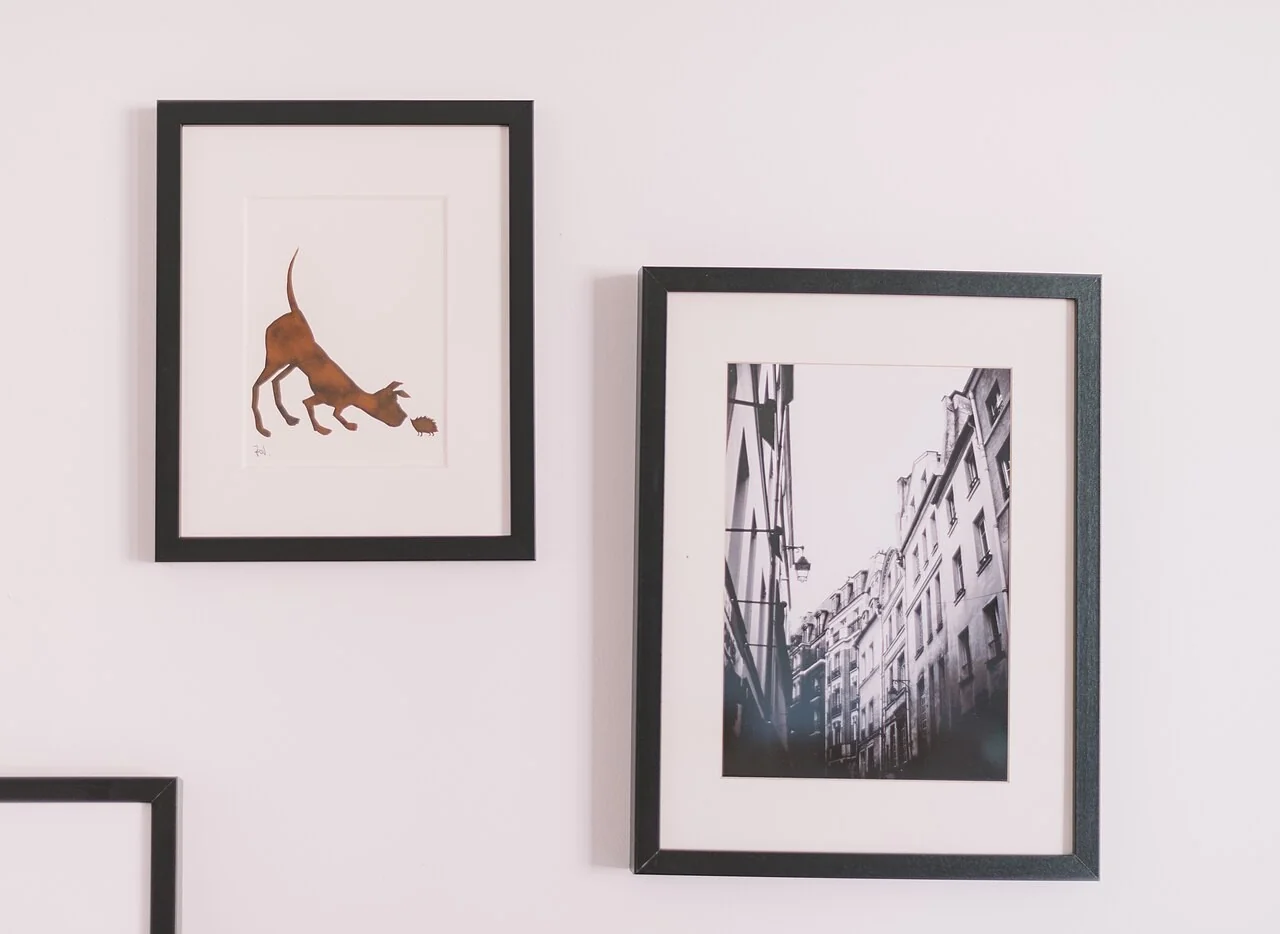
Lay the existing pictures on the floor and measure their outer frames. Include mounts and any protruding hardware. Cut paper templates to those finished sizes and arrange them on the wall using a temporary method suitable for the surface. Look from the doorway and from the seat where the arrangement will usually be seen. A narrow group may be more effective than filling the full wall. Keep switches and furniture movement in view. Do not order several new prints simply because the first layout has gaps; space can be part of the composition.
Choose fixings for each exact object
A frame's size, complete weight and hanging hardware all matter. Command's own guidance asks users to choose appropriate picture-hanging products, remain within their limits and follow application and removal instructions. Check the exact product's permitted surfaces and conditions; an adhesive system is not a universal substitute for every fixing. Keep the instructions rather than assuming another package works identically. If the frame or wall needs a different installation approach, get suitable advice. A valuable or irreplaceable object deserves a decision based on more than a convenient retail label.
Buy a small, coherent set
Once the layout works, decide which missing frames are genuinely needed. You can repeat one quiet finish while allowing different image sizes, or use existing frames with a common visual relationship. Compare usable image openings and the complete frame dimensions before ordering. For original artwork, seek appropriate framing advice instead of replacing conservation materials purely for appearance. Ask about delivery and returns when buying online, especially for fragile frames or custom sizes. Include any permitted installation cost in the overall budget rather than treating it as an unexpected extra after the frames arrive.
Keep the moving-home plan simple
Record the layout with a photograph and label the back of each frame in a suitable way. Store installation instructions and spare components together. When it is time to remove the display, follow the fixing manufacturer's actual removal procedure; pulling quickly is not an acceptable replacement for reading it. Check the landlord's expectations before repairing or repainting surfaces. A good rental arrangement is one you can enjoy and later dismantle responsibly. It should fit the room's ordinary life rather than turning the wall into a collection of purchases that cannot travel together.
Sources & further reading
Published sources for the details and examples discussed in this story.