Two eye-look lists can contain six entries without requiring six different products. The overlap matters. This original arithmetic example begins after the looks have already been specified: every fictional product is assumed lawfully intended for the eye area and individually appropriate for the user under its actual directions. The calculation does not establish those assumptions for a real product. It counts identities, not colors that happen to resemble one another.
| List | Identifiers | Distinct count |
|---|---|---|
| Look one | E01, E02, E03 | 3 |
| Look two | E02, E03, E04 | 3 |
| Shared intersection | E02, E03 | 2 |
| Combined union | E01, E02, E03, E04 | 4 |
Write the two lists without changing what they mean
The first fictional look calls for products E01, E02 and E03. The second calls for E02, E03 and E04. These identifiers represent four specified eye-product SKUs in the exercise, not shade names or instructions to apply anything. E02 means exactly the same stipulated product in both lists; E03 does too. A similar-looking product with another identifier would not count as identical merely because its screen swatch looked close.
Write each identifier once in a combined list. Start with E01, E02 and E03 from the first look. When adding the second, E02 and E03 are already present, so only E04 is new. The distinct requirement is E01, E02, E03 and E04: four products. The two lists have three entries each, but adding three and three counts the two shared products twice.
Show the overlap before comparing shopping formats
The same result can be written as three plus three minus two shared identities, which equals four. That subtraction does not remove a step from either look. It removes duplicate entries from the shopping requirement. The user still follows the already-established look and product directions; this feature supplies no application sequence, mixing instruction or performance claim.
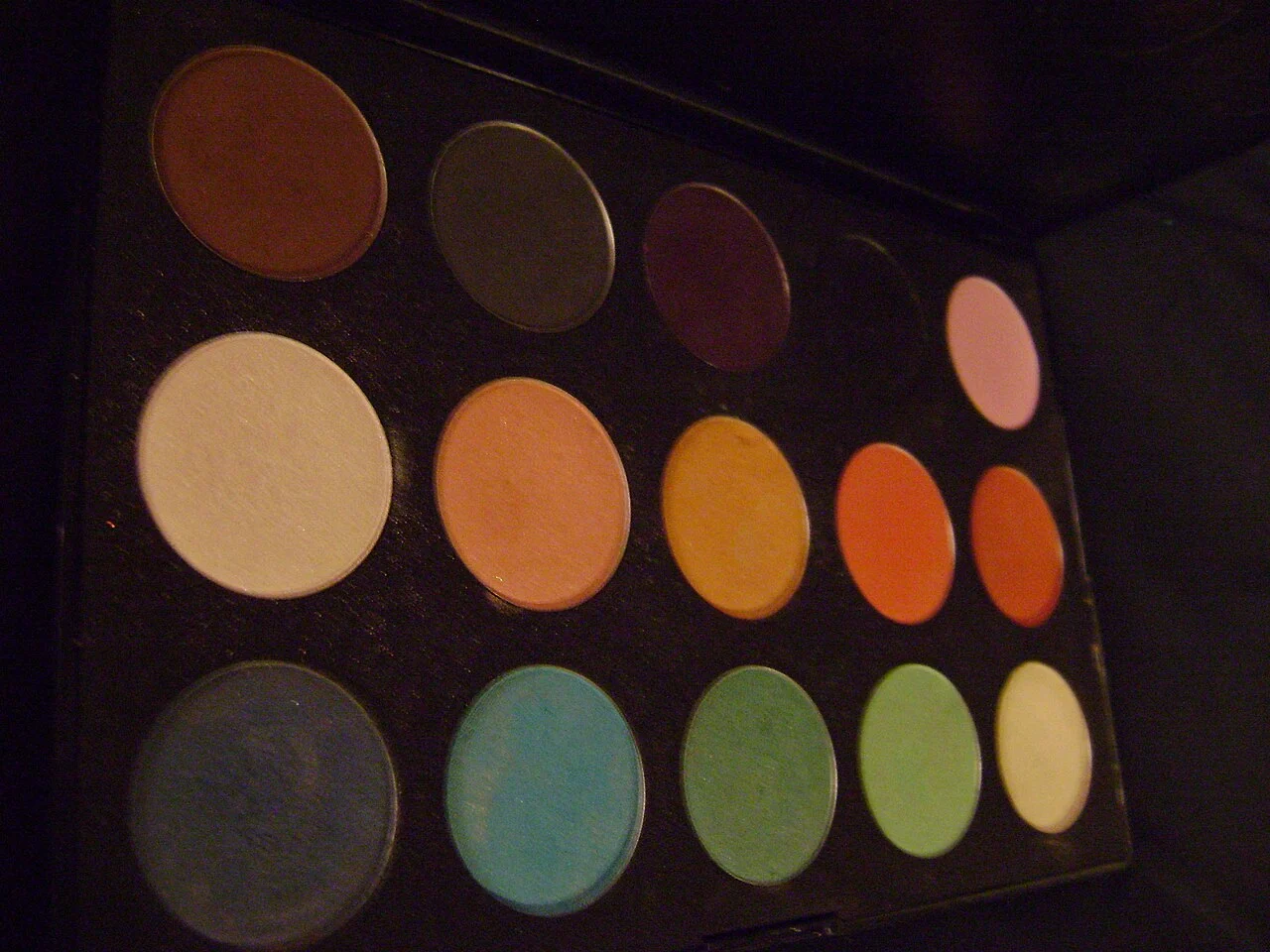
Suppose four appropriate singles corresponding to those exact fictional identifiers are available, and a six-pan palette is another candidate. The union tells us which four product requirements would need answering. It does not establish that four pans in the palette answer them. A palette can be one ordering SKU while containing several components; that retail unit is different from the set of specified products in the two look lists.
A palette needs an actual correspondence, not a visual guess
Before treating a real palette as a substitute, establish what each relevant component actually is through appropriate maker information and the intended uses of that exact product. A blue-looking pan cannot be counted as E04 merely because both appear blue. Nor does a familiar shade name prove equal formula, quantity, finish, use permission or individual suitability across formats.
If that correspondence remains unresolved, keep it unresolved in the comparison. You can still see why buying duplicate singles for E02 and E03 would be unnecessary in this stipulated example, but you cannot announce that the palette replaces the entire list. The useful result is a precise question for the maker, not a claim that arithmetic has selected a compatible cosmetic.
Compare the complete useful purchase
Once actual product questions are settled, compare the complete purchase on its own terms: what is included, how much of each required product is supplied, and the actual delivered cost. Two extra pans do not automatically make a palette better value if they have no role in the specified looks. Four separate items are not automatically economical either. A count of distinct requirements supplies neither a price nor a usage rate.
FDA explains that color additives permitted in cosmetics generally may not be approved for the eye area, and advises using products near the eyes only when intended for that use. That is why this exercise assumes legitimate and individually appropriate products before the math begins. The four-item union cannot grant permission, resolve a reaction concern or convert a lip product into an eye product.
Sources & further reading
Published sources for the details and examples discussed in this story.