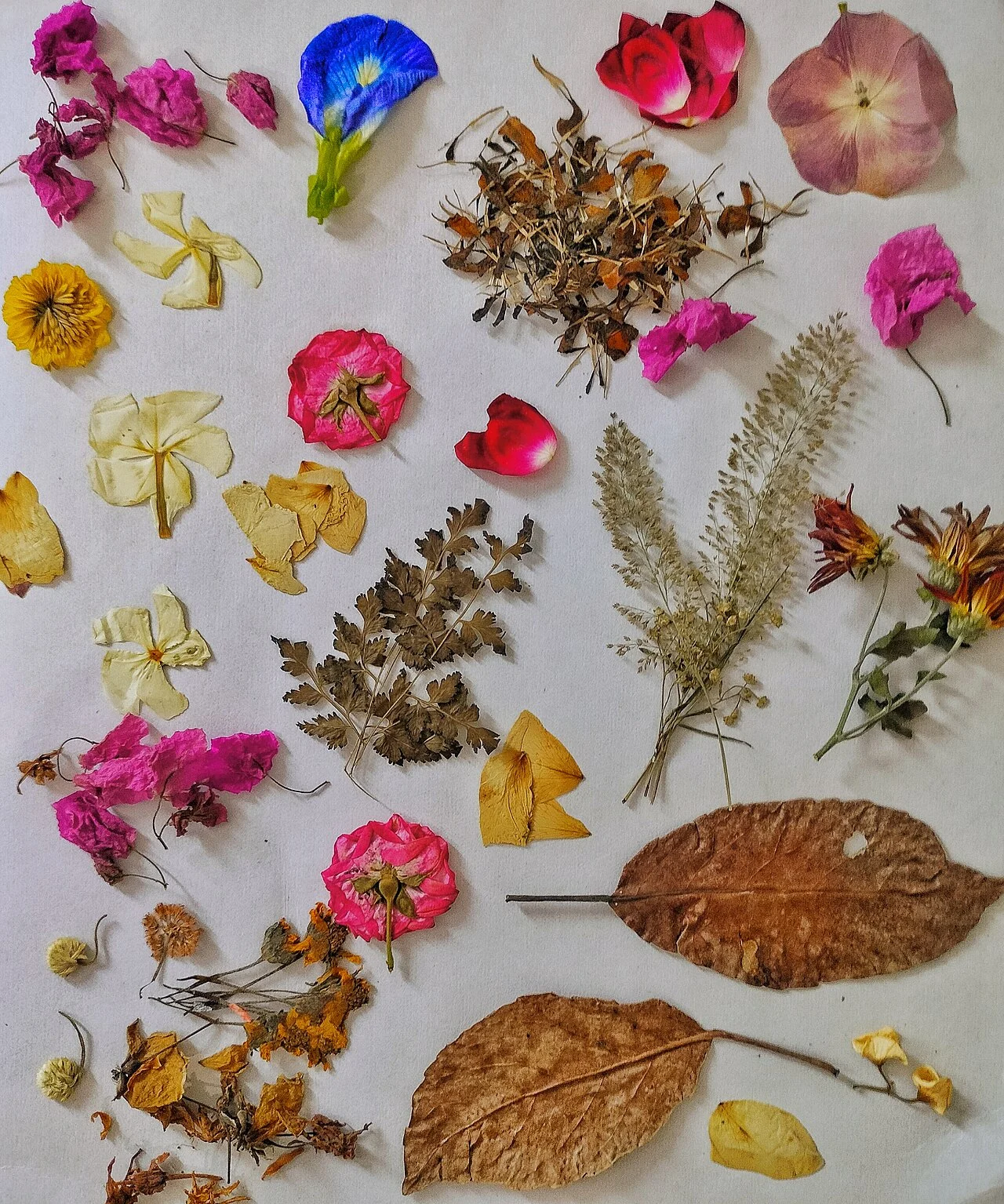
A pressed-flower picture can begin with a small question: which shapes and spaces do you want the finished arrangement to emphasize? Keep that question open while the actual material develops. A date/material observation sheet lets you return to what you started with without pretending that pressing will preserve every color or produce a museum-quality object. Use flowers you have legitimately obtained and follow the method appropriate to your actual materials.
| Original paper direction | Visual intention | Question before final display |
|---|---|---|
| Corner cascade | Weight at one corner with space toward the center | Do the actual stem lengths support the direction? |
| Loose line | Separate shapes and visible gaps | Is there enough space for each form? |
| Central cluster | Overlapping focal group and a clear border | Does the real material support the intended overlap? |
The inspiration is a starting point, not a promised result
The RHS hosts JamJar Flowers’ pressing-flower demonstration and shows examples of flowers arranged as artwork after pressing. Its page notes the appeal of delicate everyday flowers as well as showier garden choices. The text supports the creative idea; it does not establish a universal pressing time or permanent-color guarantee.
Label the material you actually use, the date and your chosen method/source. Record its appearance before and during your own process, including what you can identify and what remains unknown. This article supplies no invented pressing experiment, measured result or claim that a particular flower will keep its original hue.
Sketch before committing the material
Here are three original composition directions to explore on paper. A corner cascade places the main visual weight near one corner and lets smaller forms step toward the center. A loose line gives individual shapes more breathing room. A central cluster makes overlapping forms the focus while leaving a clear border. These are proposals, not reproductions of the RHS gallery.
Use simple paper shapes to compare spacing and direction before handling the actual flowers for a display. Note which stems or flower heads you intend to emphasize, and revise the sketch to suit the material you actually have. A plan that needs an idealized missing shape can become a reason to simplify rather than buy a second set of supplies.
Choose display supplies after the material is ready to assess
Record the actual dimensions and appearance of the material you intend to display, then ask the relevant supplier about suitable mounting/display materials and their instructions. This guide makes no conservation, adhesive-compatibility or color-longevity claim. Keep the original observation sheet with a photograph of your own completed arrangement if you make one.
Before purchasing a frame or a decorative kit, establish what size, depth and handling requirements the actual project needs. The useful outcome is a composition that responds to the material and a purchasing question grounded in its real condition, rather than a promise that a delicate botanical project will remain unchanged indefinitely.
Sources & further reading
Published sources for the details and examples discussed in this story.