A runner does not have to travel the long axis of a table. Turning one across it can interrupt that direction instead, making the central area read as a different kind of space. We drew two original top views to compare the choice with the same four plates in the same positions. They are fictional compositions, not photographs of a meal or measured plans for a particular table. The runner also remains the same drawn size; only its orientation changes.
Keep the useful objects in place
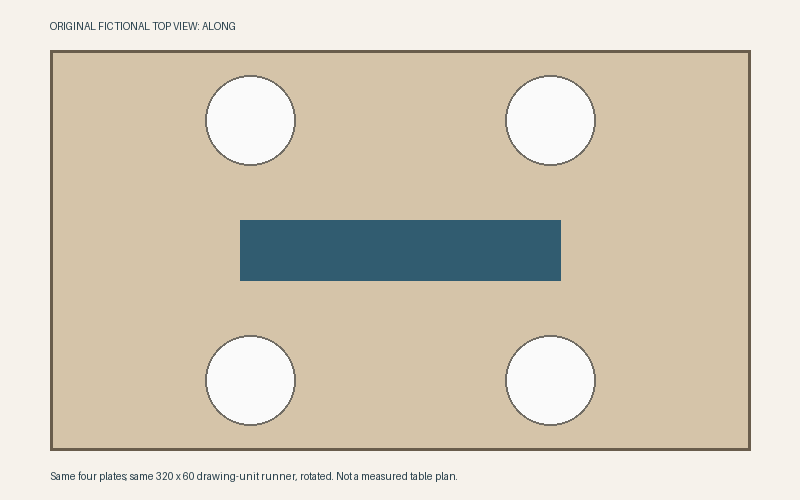
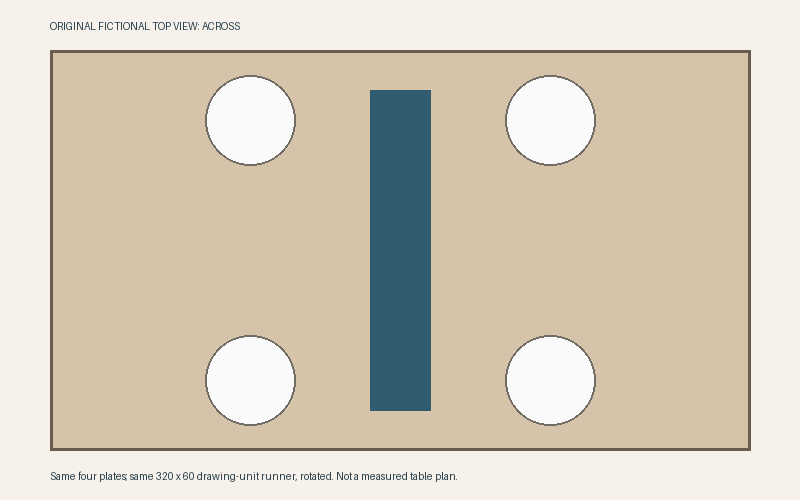
The rectangle represents a table with two plates along each long side. The runner sits in the central area without touching a plate in either drawing. Its dimensions are drawing coordinates, not centimeters or a product specification. That distinction matters: a picture can isolate a visual relationship while leaving the practical requirements of actual dining unresolved.
Keeping the dishes still prevents the comparison from becoming a change of place settings. A different set of patterned plates might alter the reading entirely. Here the plain circles do a deliberately limited job: they let the blue runner and the longer table outline establish the strongest directional relationship. No flowers, candles or extra serving pieces are added to make one version seem more complete.
Along: repeat the table’s longer direction
In the first view, the runner’s long edge is parallel to the table’s long edge. It occupies only the central part of the length; it does not extend from end to end. I read its blue band as a shorter echo of the wooden rectangle. The two pairs of plates sit above and below that common horizontal reference.
This would be my starting composition if I wanted the table to read as one extended field. The runner supplies a line within the larger line rather than a separate central display. That is a visual intention, not a prediction that four people will speak as one group. A household that likes a simpler view could also omit the runner and let the plain tabletop carry that direction.
Across: make a deliberate interruption
In the second drawing, the same runner rotates through a right angle. Its ends approach the two long table edges while remaining within the drawn rectangle. The blue band now interrupts the longer wooden field. The left pair and right pair of plates have a more noticeable boundary between them, even though no plate has moved.
I prefer this version for the fictional arrangement when I want to notice the table’s middle rather than emphasize its length. It could suggest two adjacent pairs within a shared setting. It does not assign conversation partners, reserve a serving area or guarantee that guests will find the arrangement comfortable. Those social and practical questions belong to the actual people and meal.
Check the real footprint before buying the line
A real runner may not fit both orientations as neatly as the drawing. Measure the actual usable tabletop and compare the exact textile’s dimensions, intended use and care instructions. Decide what needs to remain available for the actual dishes and serving arrangements. Do not infer heat protection, food-contact suitability or an acceptable overhang from a color block in a diagram.
IKEA’s dining page lists table linens separately from dinnerware and furniture. That is a useful place to begin investigating actual products, not evidence that every listed textile works in either arrangement. If an appropriate runner already at home can be placed suitably, compare it before purchasing another. If the transverse footprint would create an obstacle, choose a different suitable product or keep the table bare rather than defending the illustration.
Sources & further reading
Published sources for the details and examples discussed in this story.